AI Infrastructure

AI data centers, from empty land to live megawatts

If you have capital and you're looking at data centers as an asset, the hard part is never the servers — it's power, land and time. We help you decide what to build, find and secure the site, get it connected to transmission, build it modularly and hand it over running.

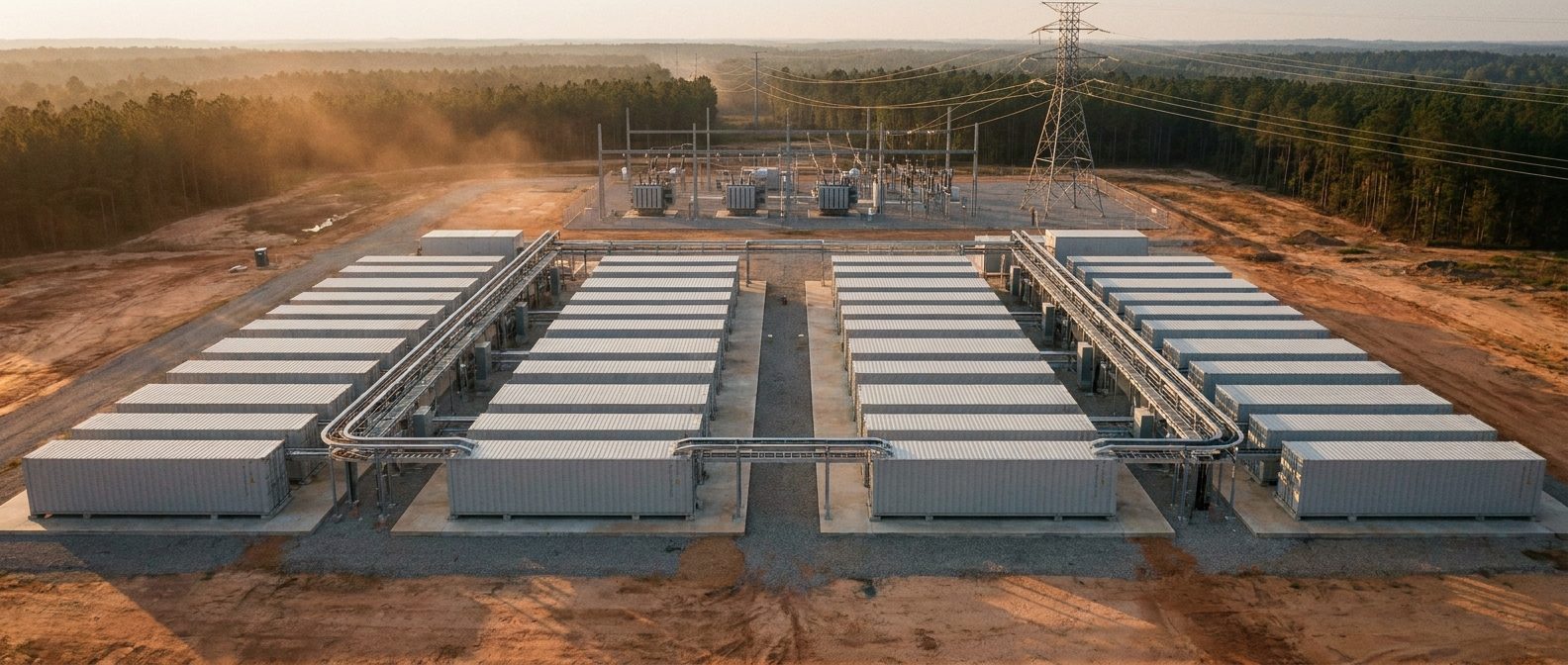
Rows of modular data center units on a prepared site, with a private substation and high-voltage transmission line behind
10–100 MW
Typical project size, phased
3–6 mo
Modular deployment vs 24–36 traditional
<1.3
Target PUE with hybrid cooling
100 kW
Per rack, liquid-cooled GPU density

For investors and owners

You have the capital. We handle everything between it and a working facility.

Most people who want to own compute infrastructure stall at the same place: which configuration actually pays back, where to put it, and who is accountable when the grid study comes back at 30 months. We take that whole chain. Below are the three structures we usually work in — the right one depends on how much of the asset you want to own and how much operating risk you want to carry.

01

You own it — turnkey build

We design and build the facility to your spec and hand over the keys. You hold the land, the asset and the depreciation.

  • Single point of accountability from site search to commissioning
  • CAPEX deal — the asset sits on your balance sheet
  • Specification written around your workload, not a catalogue product
  • In the US, integrated solar and storage can qualify for a 30% investment tax credit
02

Build-to-suit for a tenant

We build against a signed offtake — an AI company, a cloud operator or an enterprise — so the facility is contracted before it's energized.

  • Revenue secured before construction completes
  • Long-term contract, predictable cash flow
  • Tenant covenant strengthens the project financing
  • You stay the owner, we can stay on as operator
03

Joint venture

You bring land, power position or capital; we bring engineering, supply chain and delivery. We build and operate together.

  • Works well when you already control a site or a grid position
  • Shared CAPEX, shared upside
  • Scales across several facilities on one platform
  • Option to sell compute capacity rather than only lease space
Free · 30 minutes

Book a call about your data center

Tell us the budget, the geography and the time horizon. We come back with a straight answer on what that capital actually buys in megawatts, how long it would take, and where the money goes.

  • A realistic capacity and configuration for your budget — how many MW, what density, what cooling
  • The two or three geographies worth looking at, and why the others aren't
  • What securing a grid position would take in your target market, and how long it really runs
  • An honest read on whether the project is worth doing at all
Book a call

No deck, no pitch. If the numbers don't work, we say so on the call.

How it works

Seven steps from a conversation to a running facility

Nothing here is exotic. It's a long chain of unglamorous work where the expensive mistakes happen early — buying land whose interconnection queue is six years deep, or sizing cooling for a density the racks will exceed in eighteen months.

  1. 01

    Decide what to build

    Before any land is bought, we size the thing: capacity, workload profile, density per rack, redundancy level, and what the total cost of ownership looks like over ten years.

    Training clusters, inference fleets and enterprise HPC want different buildings. Getting this wrong is the most expensive error available.

  2. 02

    Find the site

    We screen land against the criteria that actually gate a data center — available transmission capacity first, then water, fiber, zoning, climate and tax regime.

    Most parcels that look perfect on a map die on the interconnection study. We check that before you make an offer.

  3. 03

    Secure land and power

    Purchase or long-term ground lease, plus the paperwork that makes the megawatts real: interconnection agreements, facility extension agreements, substation capacity.

    A site without a signed power position is farmland with a good story.

  4. 04

    Connect to transmission

    Substation, high-voltage interconnect, transformers and switchgear — engineered, procured and coordinated with the utility, in phases if the load ramps.

    This is usually the longest pole in the tent, which is why we start it in parallel with design rather than after it.

  5. 05

    Engineer and manufacture

    Detailed design of power, cooling and network, then factory production of the modules while site works and foundations proceed in parallel.

    Building the box and preparing the ground at the same time is where most of the schedule saving comes from.

  6. 06

    Install and commission

    Delivery, assembly, integration, testing and handover — power on, cooling balanced, network live, load proven.

    Pre-configured modules arrive tested, so commissioning is verification rather than discovery.

  7. 07

    Operate and monetize

    Run it, or have it run: colocation, hosting, GPU-as-a-service, reserved clusters, or wholesale capacity to a single large operator.

    A megawatt sold as electricity has one value. The same megawatt sold as AI compute has a considerably higher one.

Anatomy

What a data center is actually made of

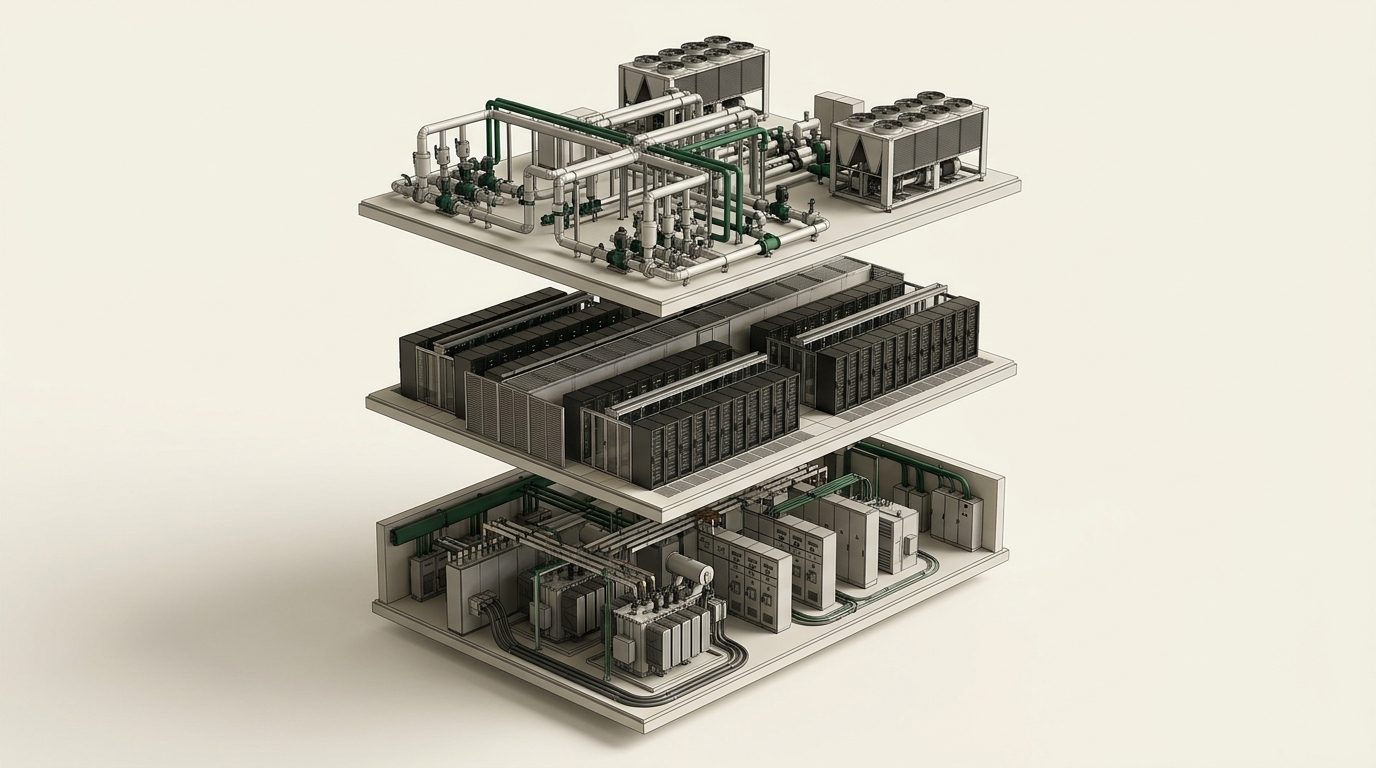
Strip away the marketing and an AI data center is four systems that all have to be sized together: something to bring power in, something to take heat out, something to move data, and a structure to hold it. Get one wrong and the others are wasted.

Exploded cutaway of a three-level modular data center showing the power floor, the rack floor and the cooling plant above it
A facility, pulled apart: electrical distribution at the bottom, compute in the middle, cooling plant on top. Each level is a set of modules built in a factory, not a room poured on site.
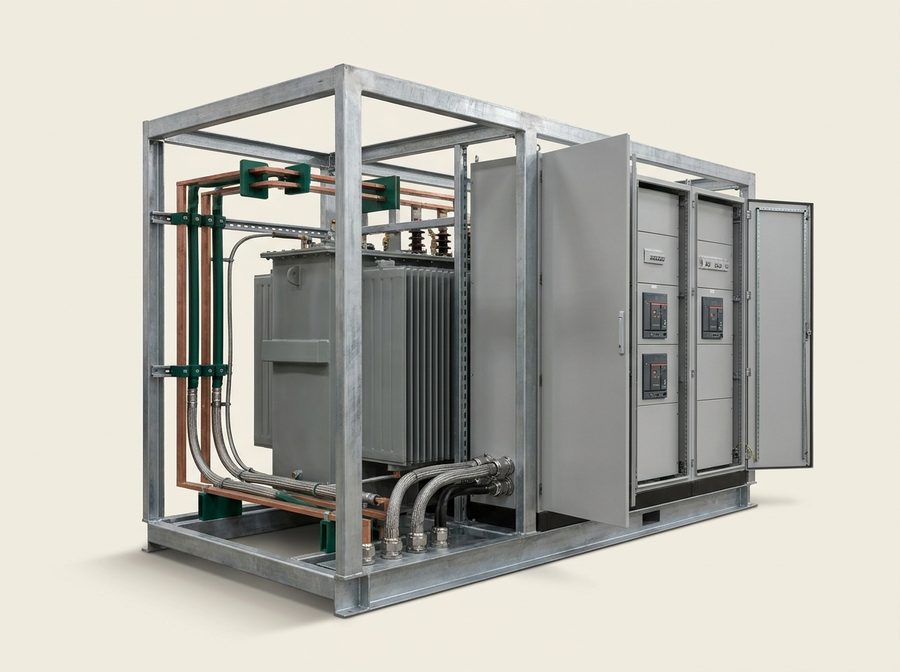
Skid-mounted power module with a transformer, switchgear cabinets and copper busbars in a galvanized steel frame

Power

The gating constraint on every project. Everything upstream of the rack, from the transmission line to the busbar.

Grid interconnect
High-voltage connection to transmission, typically 138 kV and up
Substation and switchgear
Step-down, protection and distribution to the halls
Transformers
Medium and low voltage distribution inside the module
BESS
Battery storage for ride-through, load balancing and peak shaving
On-site generation
Solar, gas or hydro depending on the site — reduces grid dependence and OPEX
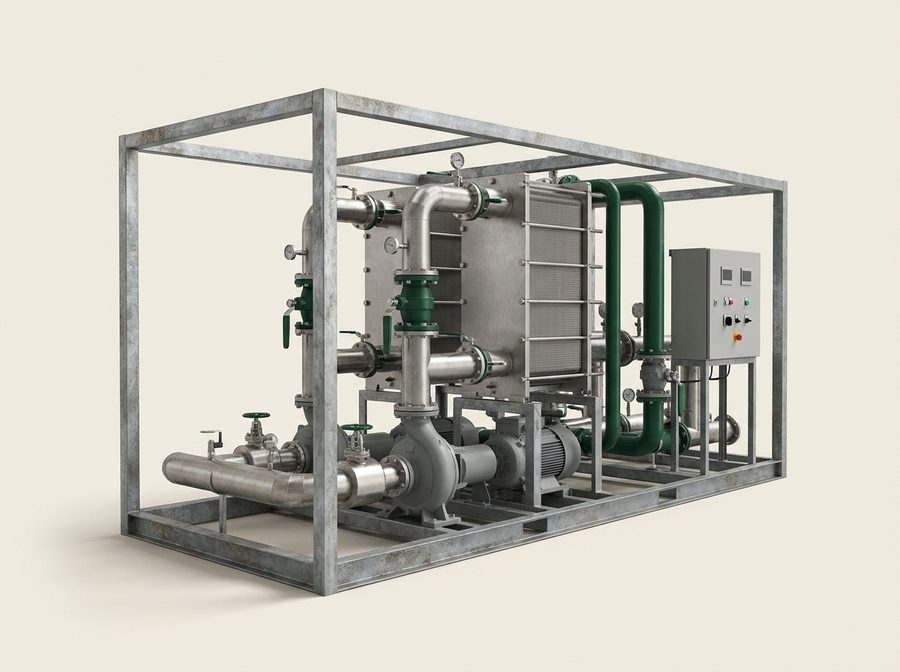
Cooling distribution module with plate heat exchangers, redundant pumps and insulated stainless pipework

Cooling

AI racks run at densities that air alone can no longer handle. Cooling design follows the chip, not tradition.

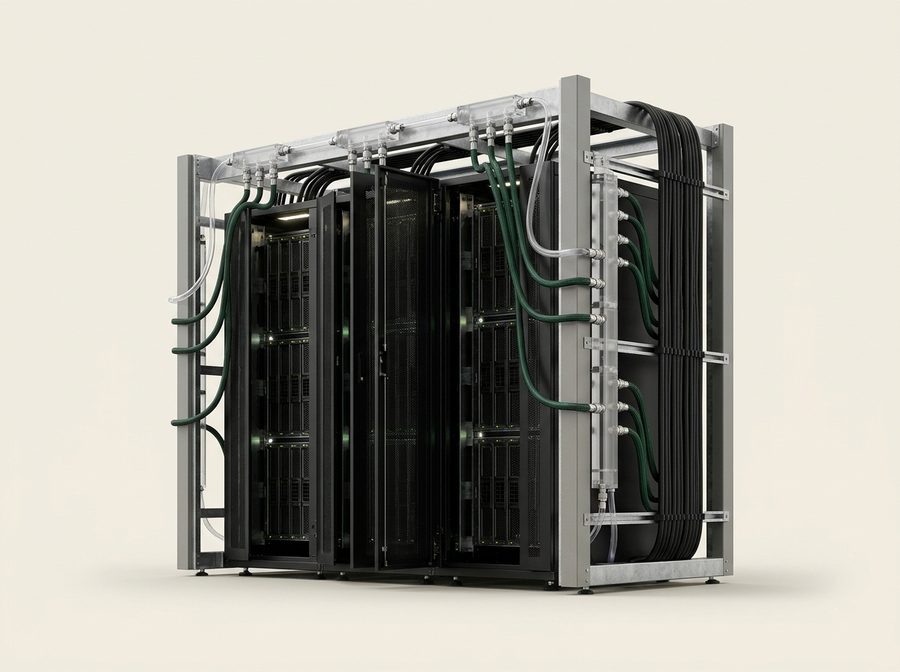
Liquid-cooled racks
Direct-to-chip loops for high-density GPU and HPC loads
Cooling distribution unit
Isolates the facility loop from the rack loop and controls temperature
Dry coolers
Free cooling wherever the climate allows it — the cheapest cooling is the kind you don't run
Chilled air handling
For the mixed and lower-density parts of the load
Heat recovery
Organic Rankine Cycle turns waste heat back into electricity, or feeds a district loop
Liquid-cooled compute module: racks of GPU servers with coolant manifolds and quick-disconnect hoses

Network and compute

The part everyone pictures — and the part that is easiest to change later.

Network module
Pre-cabled fiber and copper, built for scale-out topologies
Optical interconnect
Photonics moves more data per watt than copper at distance
Carrier connectivity
Diverse routes and enough capacity for training-scale data movement
Compute halls
Racks, PDUs, structured cabling — configured to the workload
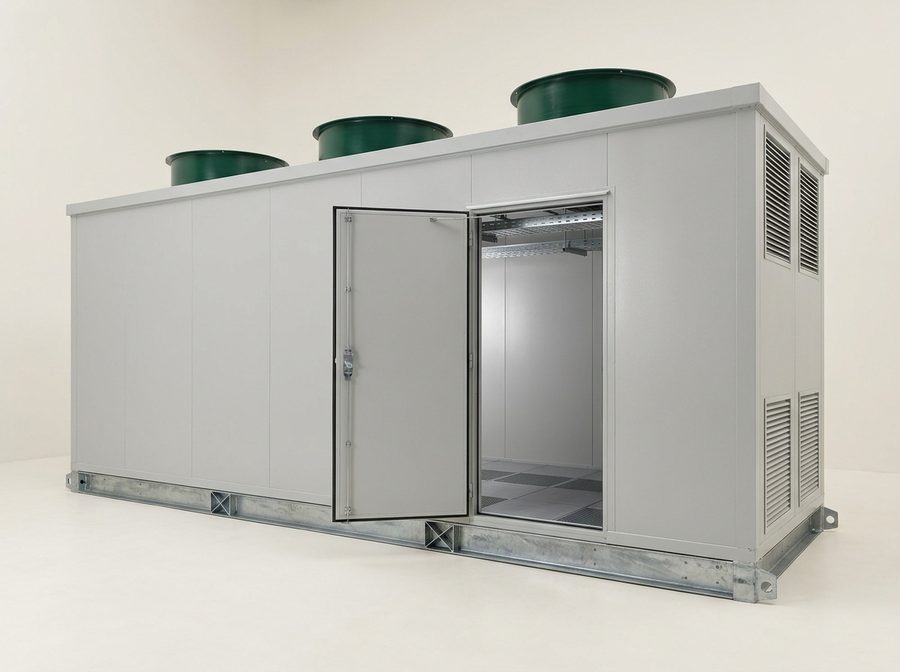
Prefabricated data center enclosure with one door open, showing the raised floor and overhead cable trays inside

Site and structure

The unglamorous half of the CAPEX, and the half that determines the schedule.

Land
Enough of it, zoned correctly, near transmission — the three rarely coincide
Foundations and civils
Pads, access roads, drainage, security perimeter
Modular enclosures
Factory-built structures that arrive tested rather than assembled on site
Water
Wells or municipal supply for evaporative and hybrid cooling schemes
Security and fire
Physical access control, detection and suppression

Why modular

The same megawatts, roughly a year and a half sooner

Traditional data center construction was designed for a market where demand was predictable and you could plan three years out. AI demand does not behave that way. Modular construction moves most of the build into a factory and runs it in parallel with site preparation.

Traditional buildModular build
Time to first megawatt24–36 months3–6 months
CAPEXRising 30–50% on materials and labor20–30% lower via factory production
Land footprint700+ acres per gigawattDense vertical and stacked layouts
ScalingFixed at design, expensive to extendPhased from 10 to 100+ MW
AI readinessRetrofit needed for GPU densityLiquid cooling designed in from the start
RenewablesBolted on, if at allSolar, storage and heat recovery integrated
Supply chainLocal contractors, local pricesEstablished international sourcing

Modular is not automatically the right answer. For very large single-tenant campuses on cheap land, conventional construction can still win. We tell you which case you're in before you commit capital.

How it gets built

Four stages from bare ground to running load

This is what the schedule actually looks like on site. The trick isn't working faster — it's that the modules are being built in a factory the whole time the ground is being prepared, so two of the longest jobs happen at once instead of one after the other.

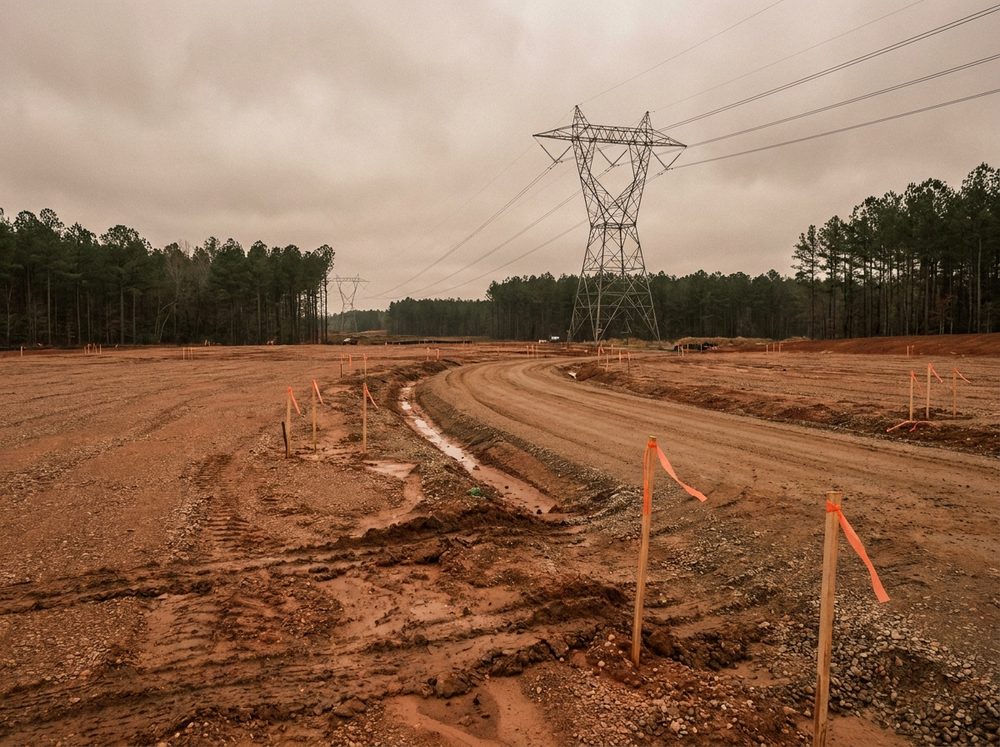
  1. Graded and staked data center site with a high-voltage transmission line crossing behind itStage 1

    Clear and grade the site

    Access roads, drainage, survey, compaction. Unglamorous and easy to underestimate — this is where a cheap parcel starts costing money.

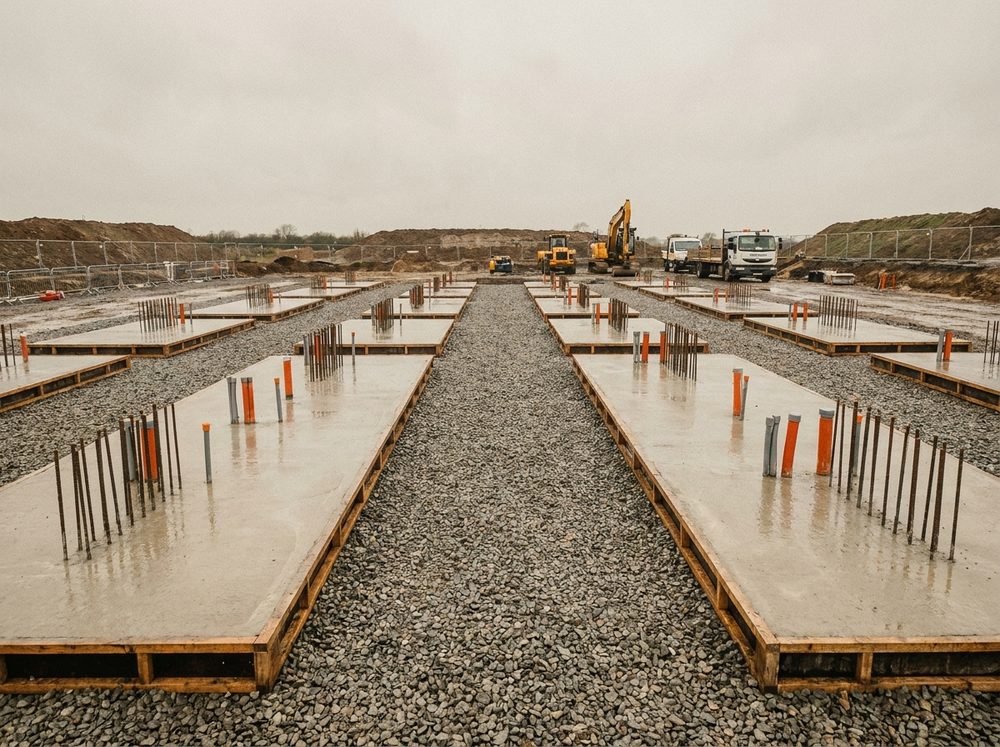
  2. Freshly poured concrete foundation pads in rows with rebar and electrical conduit stubsStage 2

    Pour foundations and pull services

    Concrete pads in the module grid, conduit and earthing cast in, water and fiber brought to the boundary. Module fabrication is already underway in the factory.

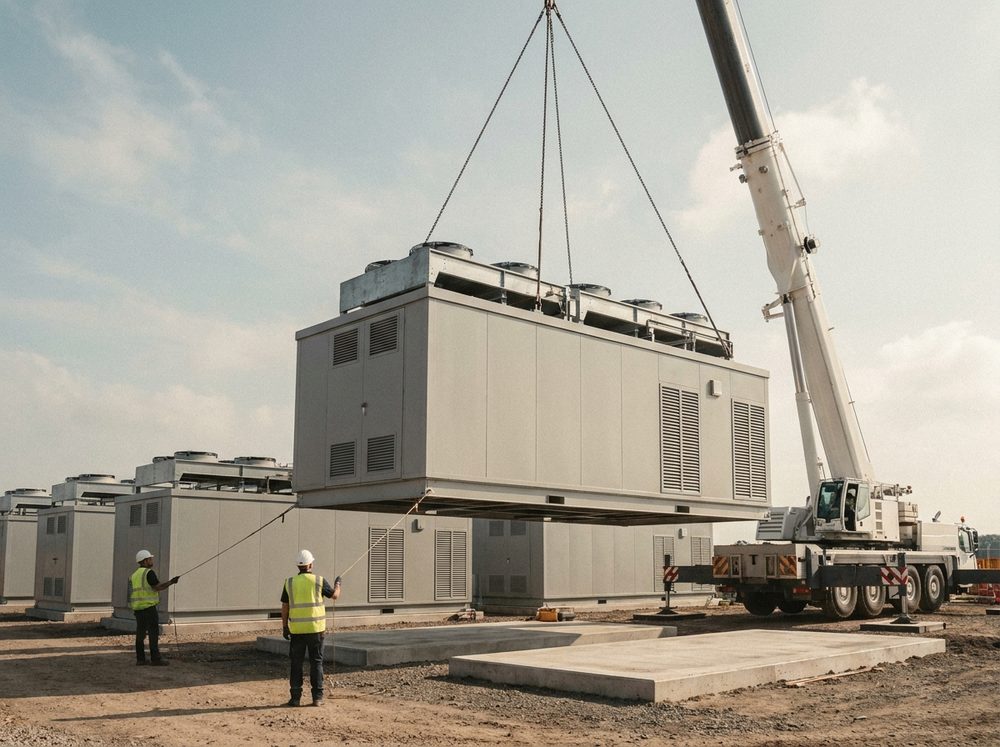
  3. Mobile crane lowering a prefabricated data center module onto its concrete padStage 3

    Set the modules

    Modules arrive tested and are craned onto their pads, then coupled: power, cooling loops, network. A row goes down in days rather than months.

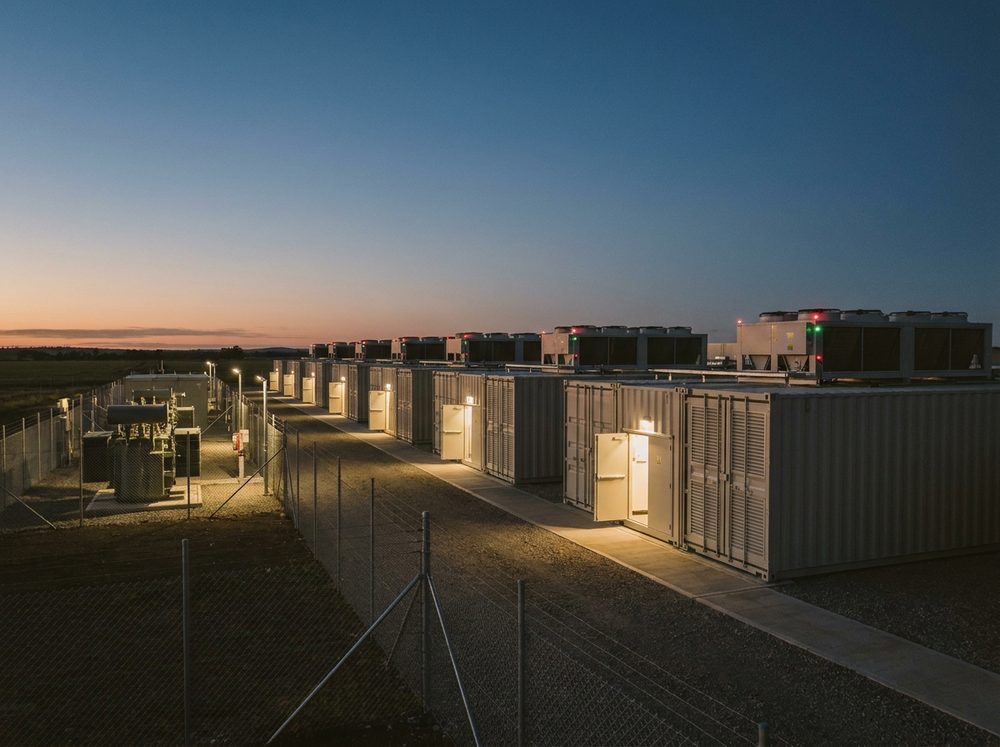
  4. Energized rows of modular data center units at dusk with the substation lit alongsideStage 4

    Energize and prove the load

    Commissioning, cooling balanced, redundancy tested, load ramped. Because the modules were tested in the factory, this stage is verification rather than discovery.

Stage durations depend on the site: grading and foundations move fast on flat, dry ground and slowly on anything else. Grid works run in parallel throughout and are usually what sets the finish date.

Sites and projects

What we're working on

A representative selection of the sites in our pipeline — one in advanced diligence, three under evaluation. They give a sense of what a viable data center site looks like in practice: power position first, everything else second.

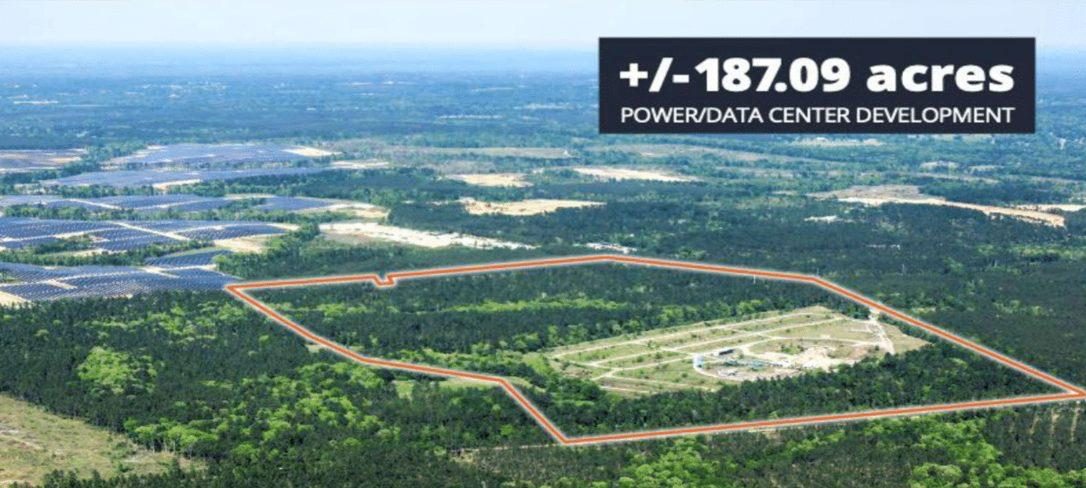
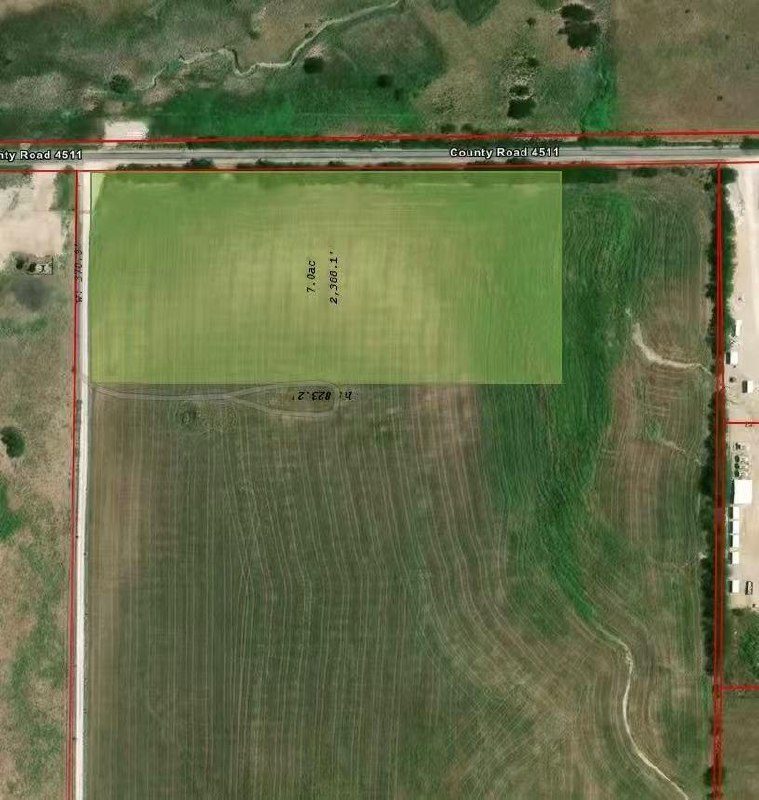
Aerial view of a 187-acre power and data center development siteIn diligence

187-acre site, 70 MW secured

East Texas, United States

A large parcel with an existing private substation and an on-site high-voltage grid interconnect. The regional transmission utility has approved a facility extension for 70 MW, delivered in two phases as the substation expands. Natural gas runs a few miles out, there are five water wells on the property, and fiber is being installed now.

Power securedGas adjacentOn-site waterFiber in progress

Key parameters

Site area
~187 acres
Power
70 MW facility extension approved, phased
Interconnect
138 kV, substation on site
Water
5 wells, ≥46,000 gal/day
Connectivity
400 Gbps installing, 1 Tbps confirmed
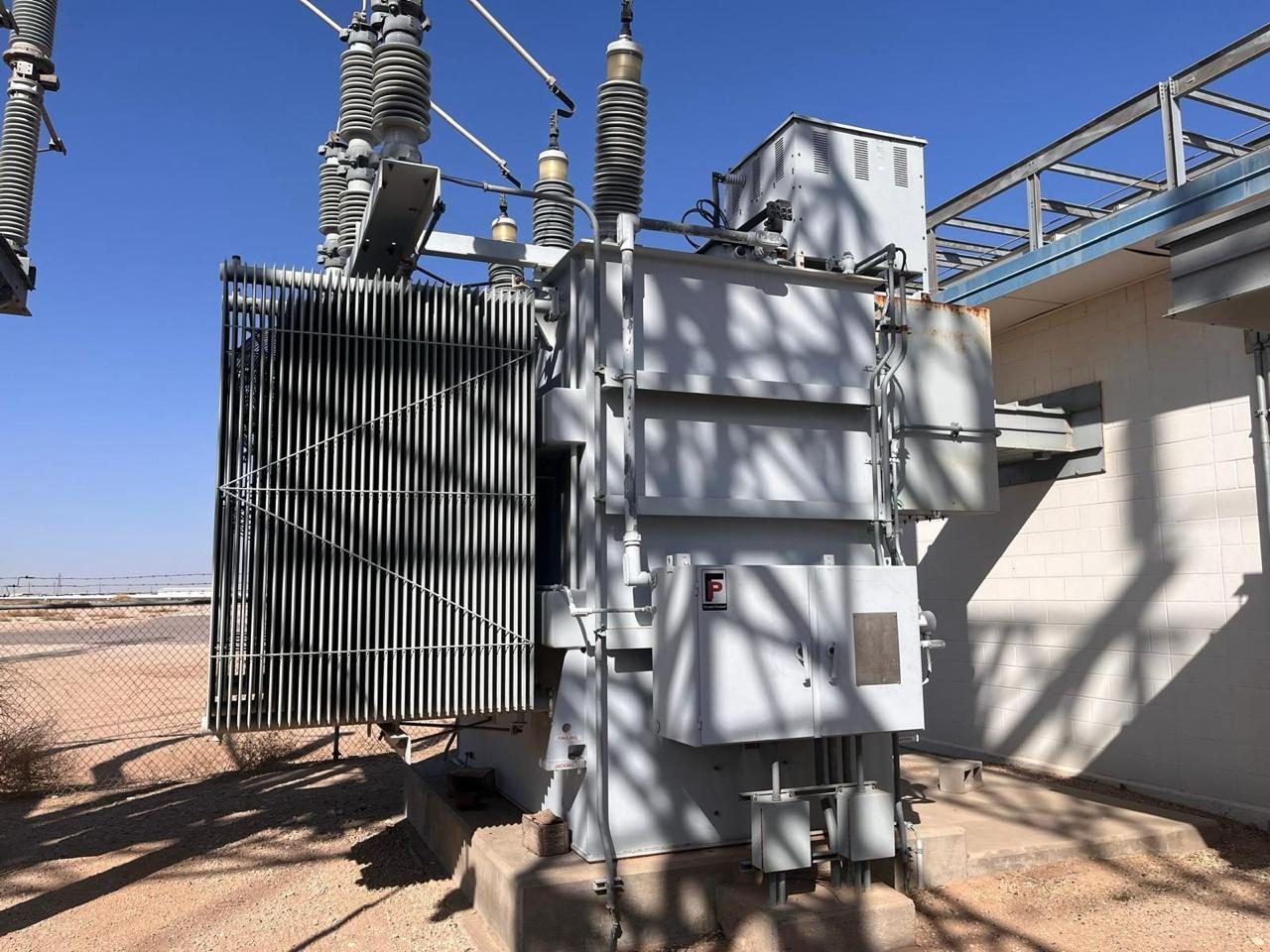
High-voltage transformer and substation equipment at a West Texas siteUnder evaluation

105 MW power-ready site

West Texas energy corridor, United States

A development-ready site with a direct grid connection and substation, switchgear and transformer infrastructure already installed. Structured for step-down and containerized deployment, which means megawatts can be brought online in increments rather than all at once.

Grid-connectedSubstation on siteContainerized

Key parameters

Indicative capacity
~105 MW
Infrastructure
Substation, switchgear, transformers installed
Structure
Long-term ground lease under discussion
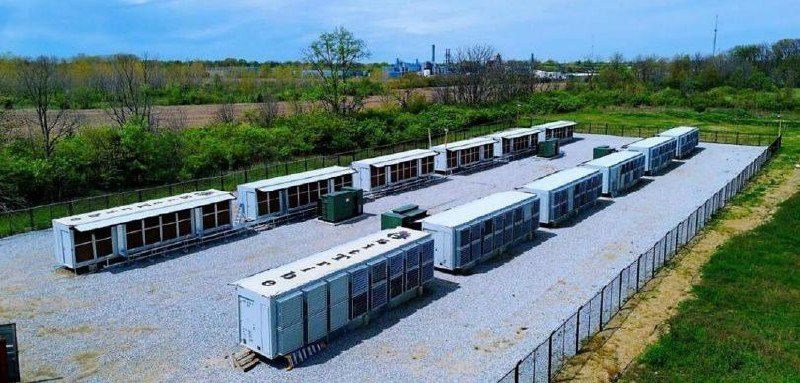
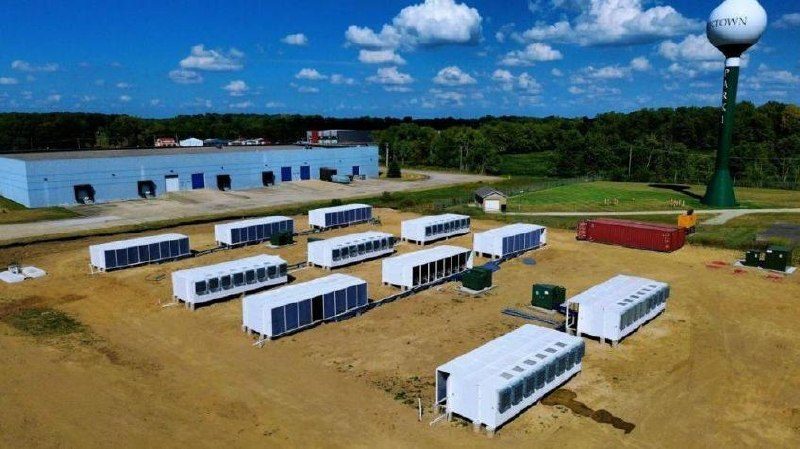
Rows of modular data center containers at an operating siteUnder evaluation

41 MW operating portfolio, +20 MW approved

Midwest United States, MISO grid

A fully energized multi-site portfolio — three co-located facilities within an hour of each other — with an operations team already in place and a track record above 99% uptime. Substation capacity for a further 20 MW is already approved, which makes it a candidate for redeployment to AI and HPC loads.

Live and energizedMulti-siteExpansion approved

Key parameters

Live capacity
41 MW
Expansion
+20 MW, substation-approved
Uptime record
>99%
Operations
Team in place
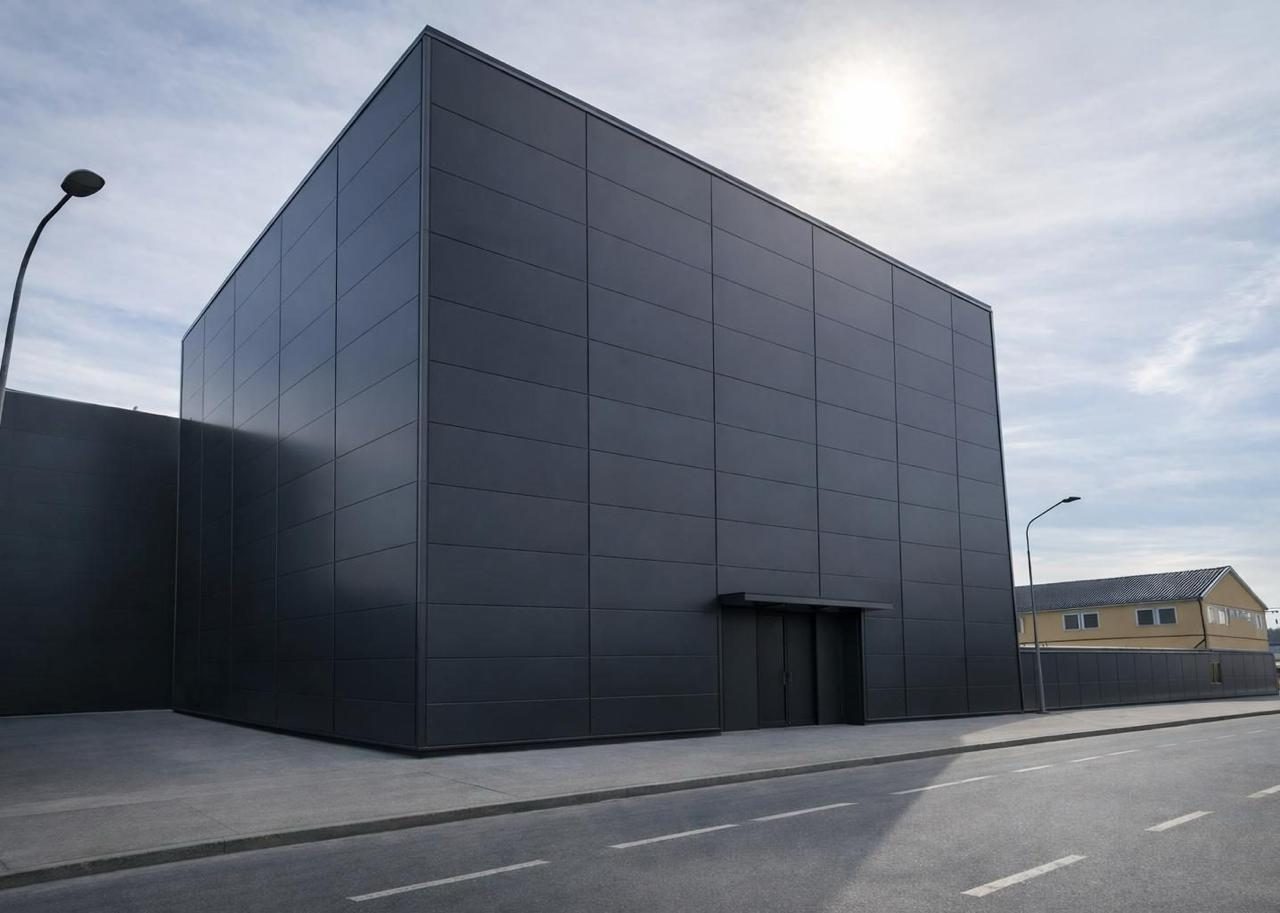
Industrial building earmarked for conversion into a high-density compute facilityUnder evaluation

10 MW high-density conversion

Stockholm, Sweden

Conversion of an existing steel-frame industrial building into a vertical high-density compute facility, aimed at inference and fine-tuning workloads in a supply-constrained in-city power market. Industrial zoning and building permits are already in place, which removes the slowest part of a European build.

Building conversionIn-city powerPermits in place

Key parameters

Critical IT load
10 MW, phased from 2 MW
Site power position
15 MW
Permitting
Zoning and building permits secured

Counterparty names, exact addresses and commercial terms are withheld — these materials are covered by confidentiality agreements. Status reflects where each site stands today, not a claim of ownership.

On the ground

The infrastructure behind the megawatts

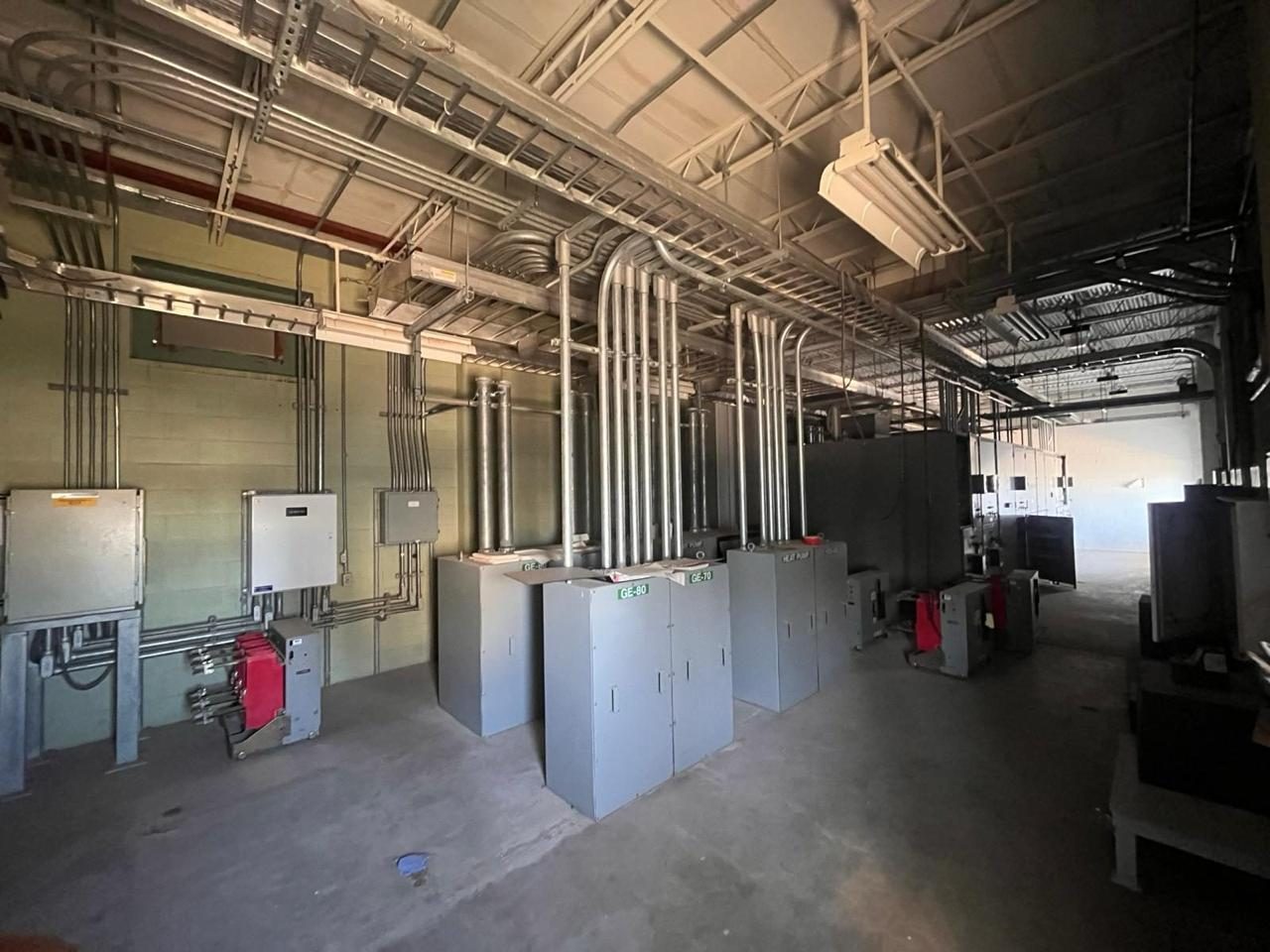
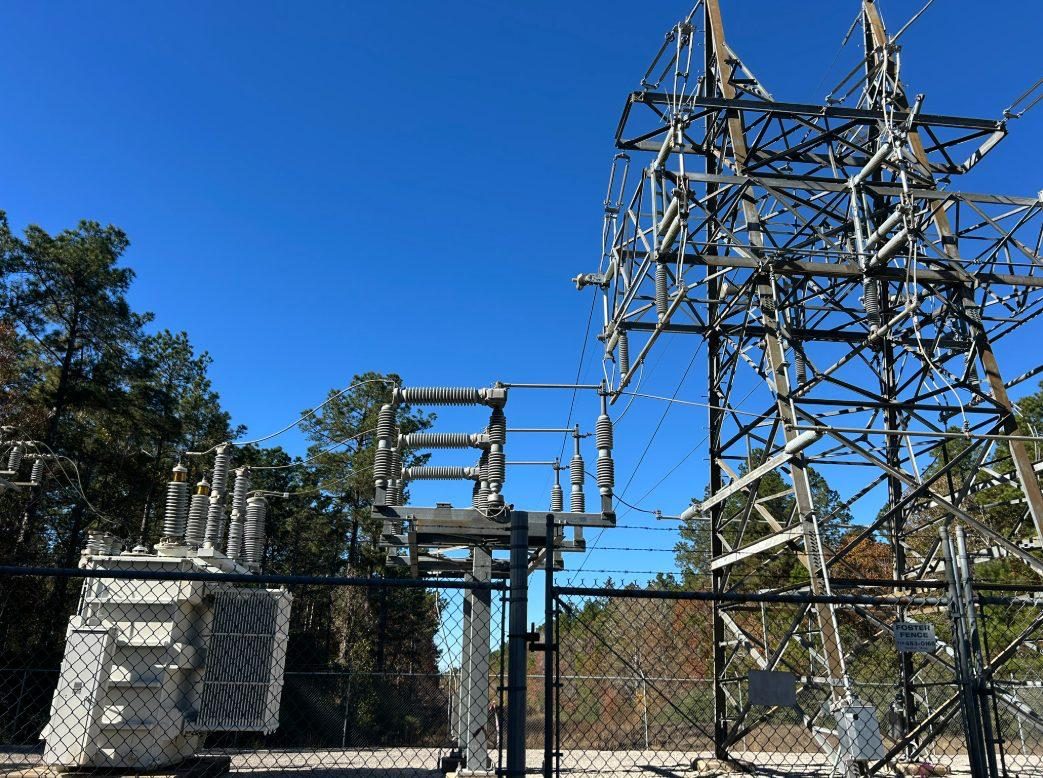
Photographs from site diligence and live deployments. This is what most of the work actually looks like — substations, switchgear rooms and steel boxes on gravel, long before anything resembles a server room.

Site selection

What makes a parcel worth buying

We screen sites in this order. A site that fails the first test is not a data center site, no matter how good the price is.

  1. 01

    Available transmission capacity

    Not proximity to a power line — actual deliverable megawatts, with a utility willing to commit to them on a timeline. This single factor eliminates most candidate sites.

  2. 02

    Interconnection timeline

    A queue position measured in years turns a good site into a bad investment. We check the study status before anyone signs anything.

  3. 03

    Water and climate

    Cool climates cut cooling OPEX for the life of the asset. Water rights matter wherever evaporative or hybrid cooling is on the table.

  4. 04

    Fiber and carriers

    Diverse routes and real capacity. Training workloads move data volumes that make a single provider a single point of failure.

  5. 05

    Land, zoning and permits

    Correct zoning, buildable ground, room to expand, and a permitting authority that has done this before.

  6. 06

    Tax and incentives

    Investment tax credits, sales tax exemptions on equipment and local abatements can move the returns more than a better price on the land.

Who does the work

A team that has built this before

Data center development is not one discipline. It's engineering, procurement, energy, construction, project finance and law, and it fails at the seams between them. We assemble the whole chain under one point of accountability.

Data center engineering

Specialists with delivery experience on US data center projects, including facilities in Texas — electrical, mechanical, cooling and modular integration.

Supply chain

Established international sourcing for the long-lead items that stall projects: transformers, switchgear, cooling plant, batteries and network hardware.

Energy and grid

Interconnection strategy, utility negotiation, on-site generation and storage, and the tariff structures that determine whether the economics work.

Project finance

Structuring the holding and project companies, modelling the returns and bringing in institutional capital alongside yours.

Legal and regulatory

International corporate structuring, land and power contracts, offtake agreements and the regulatory process in the host jurisdiction.

Software and AI

Our own discipline — the operations, monitoring and AI systems that run on top of the facility once it's live. See our AI engineering work for what that looks like.

Where we work

Sites on four continents

Power is local. The right jurisdiction depends on what you're optimizing for — cheap electricity, speed to market, tax treatment or proximity to your customers.

United States

Texas and MISO — deep transmission capacity, 30% investment tax credit on integrated solar and storage
Northern Europe

Cool climate, clean grids and in-city power positions for latency-sensitive inference

South and Southeast Asia

Hydropower economics and sovereign AI programmes, with India as the logistics and equipment hub

Africa and Latin America

Government-backed sovereign data center initiatives opening genuinely new markets

FAQ

What people ask before the first call

There is no honest single number, and anyone who gives you one on a website is guessing. The cost is driven by land price, how much grid work the site needs, rack density and therefore cooling architecture, whether you integrate generation and storage, equipment lead times and local labour. We price it properly once we know the site — a bad site can cost more in grid works than the entire IT load.

Modular deployment runs 3–6 months from a prepared site, against 24–36 months for conventional construction. The honest caveat is that securing land and a firm power position usually takes longer than building the facility, which is why we start the grid conversation first.

A conversation. Concretely: roughly what you want to invest, whether you want to own the asset or contract it out, whether you have a target geography or an existing site, and what your time horizon is. From there we can tell you fairly quickly whether the project makes sense.

No, but it changes the risk profile substantially. Build-to-suit against a signed offtake finances far more easily than speculative capacity. If you'd rather not carry the leasing risk, we structure it that way from the start.

Whoever the structure says. In a turnkey build you own the land and the asset outright. In a joint venture, ownership splits according to what each side contributes — land, power position, capital or delivery. We set this out before any money moves.

We build and deliver the facility, and we work with the supply chain for the compute hardware. Whether GPUs sit in the same contract depends on your model — some owners lease shell and power, others want the whole stack including the compute revenue.

Optional. Some clients take the keys and run it themselves, others want us on a long-term operations contract. Since we also build the AI and automation software, we can take on the monitoring and operations layer as well.

Not ready for a call?

Tell us what you'd like to automate — we'll reply with a concrete plan and an estimate within one business day.

No newsletters, no spam — we only reply to your request.